Lately, out on the dancefloors, I caught myself thinking about that funny idea my friend Dany once told me about — "your weekly dose of beats and your weekly dose of dancing":
"You know, Chris, every week I need my dose of dancing to balance out my mental health. It's simple — I've realized that when I don't dance, my week doesn't go well. So the solution is simple: I dance, and the week I'm happy, charged with energy."
And sure enough… I was watching you all dance over the weekend, like animals, watching you smile, be happy, watching MYSELF be happy, grateful for it, at peace, and it made me think about the depth of the treatment that dancing can offer us.
I had this impression that, deep down, dancing gives us periods of re-attachment to our lost fragments of consciousness... It lets you dive into yourself, find a part of yourself again, revisit your weeks, your joys or your sorrows, and sometimes heal. Isn't that maybe, at its core, the real treatment?
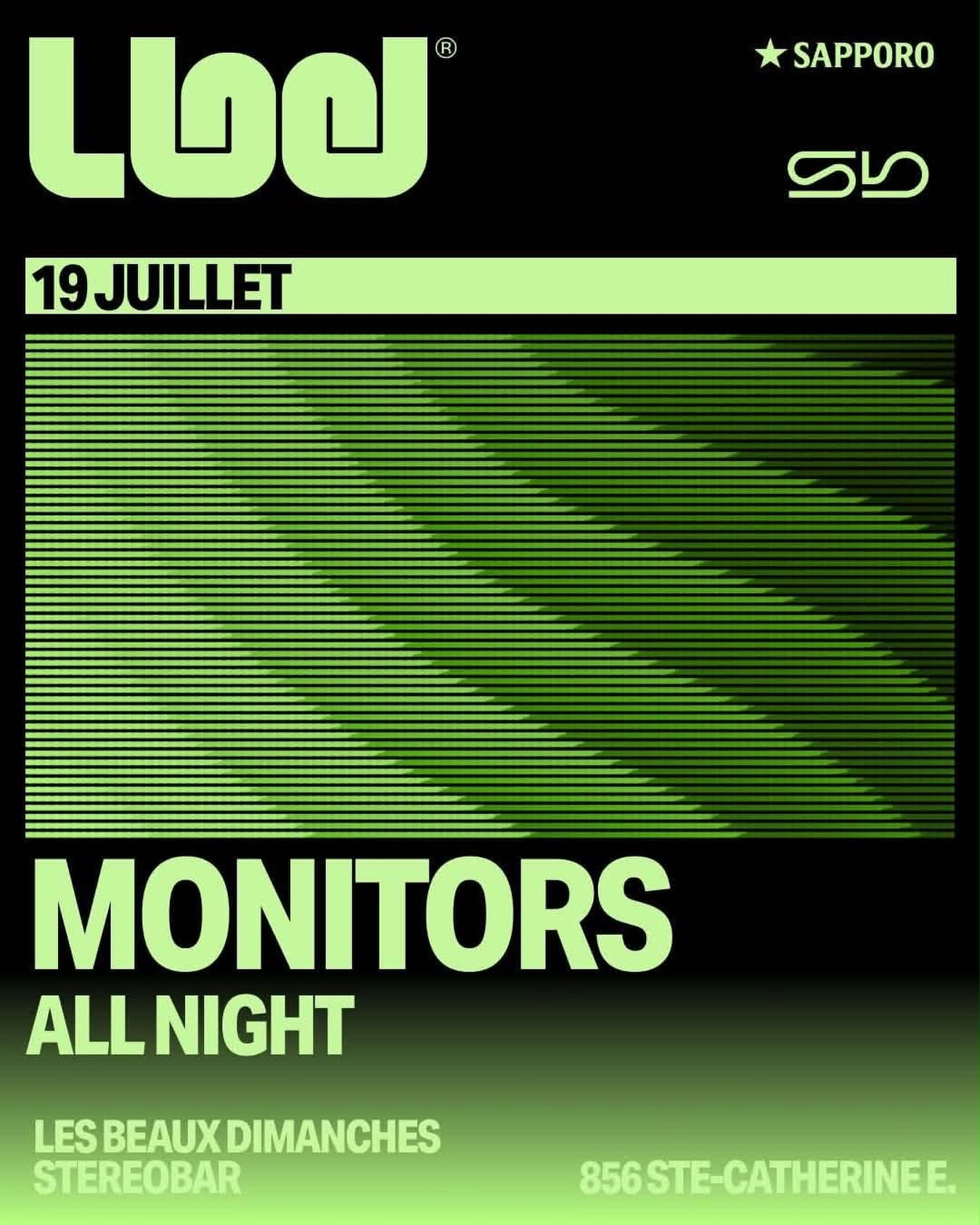
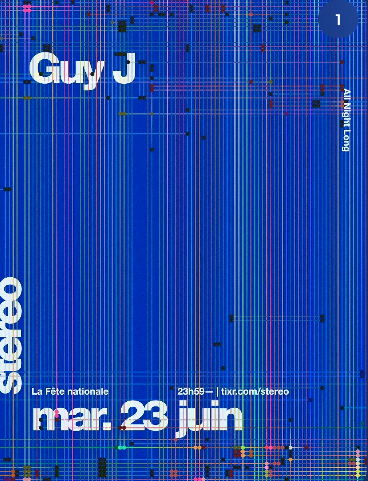
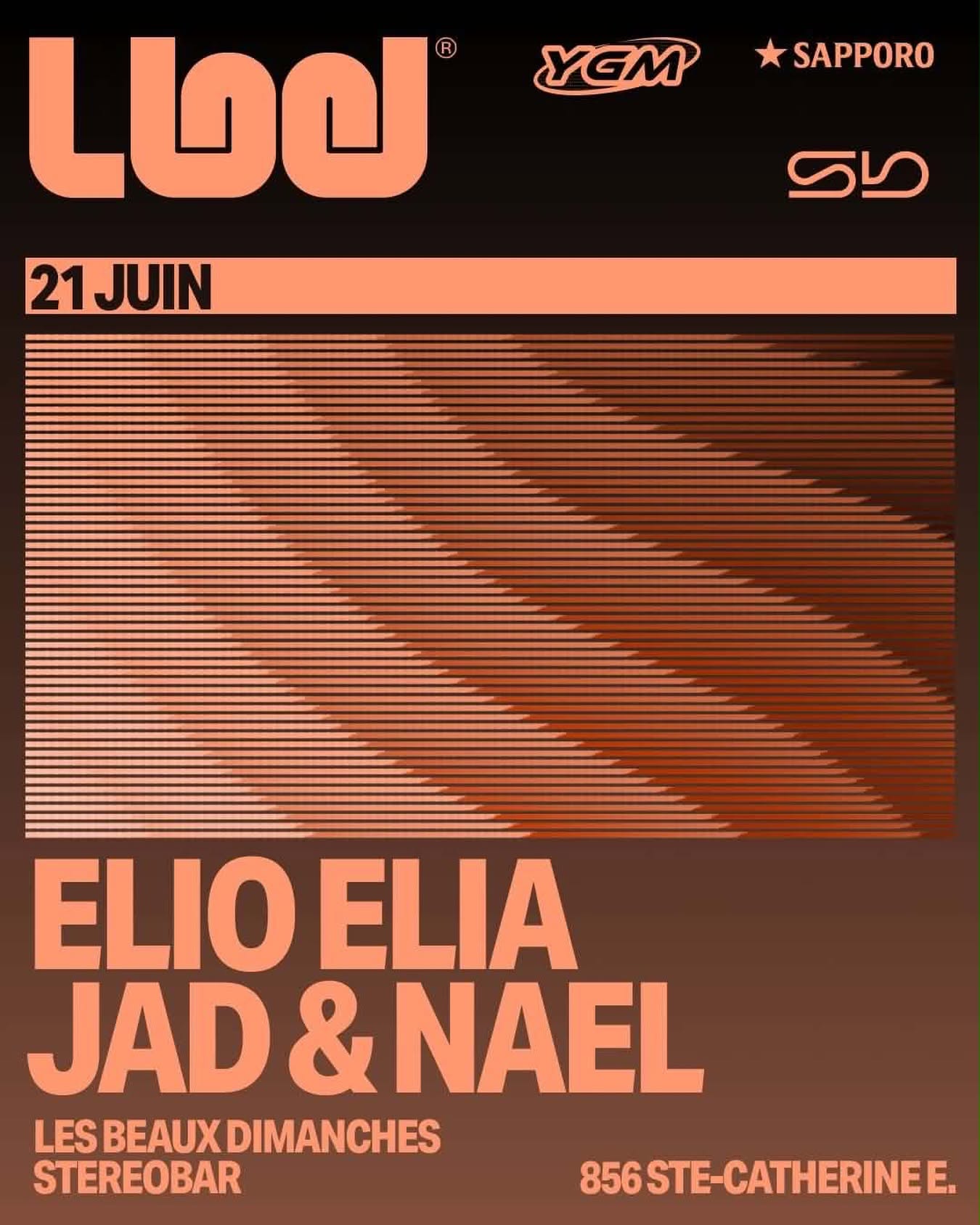
And this weekend, I got my dose. At Stereobar among other places, Sunday night at Les Beaux Dimanches with Monitors, we had extraordinary music and DAMN did we get our dose of beats! It's such a JOY to be able to strengthen our connection to familiar faces, in the pleasure of celebrating the week, closing out the weekend, and dancing with people we love…
Thinking back on it, I realize that's exactly what I felt all weekend, all over Montreal. It's incredible — the community, the collective, and what I call the "Maillage" (literally, the meshing, the weaving-together of people) — that is, the happiness of exchanging with and running into familiar faces, from a mature community, where people's kindness toward one another is practically part of the scenery.
Have you ever realized that no matter where you show up, you're never alone?
You never find yourself a stranger in your own home. There's always at least ONE familiar face, someone you've already shared a little exchange with, who recognizes you, gives you a little nod, and makes you feel a bit at home…
Without necessarily even really knowing people sometimes, you recognize the faces, you know a bit of the stories. You know the characters who fill their role, OR their role, very well in the imagination of the night, in all its madness, its temporality, that fleeting moment where people freed from their daytime costume finally reveal themselves in all their beauty, without the artifice of daylight.
It's this "Maillage" between everyone that contributes to that intrinsic feeling of security, because we already know our environment.
That's the strength of our collective.
2. Why this becomes so preciousAs much as this world can hold such beautiful, momentary, spontaneous, occasional exchanges and sharing, it can just as much hold abuse, excess, darkness, and things that will never be said, lost in the darkness of the night.
So it comes down to a balance, a right search, a good place, in what each of us goes looking for within the framework of after-hours, clubs, DJs, music, dancefloors, fashion, the preparation of your nights, and even becoming a "professional clubber," so to speak.
Because yes, there really is a nightlife ethic.
Let's see how it shows up…
These people you know more or less, but who are part of the environments you frequent, who make you feel good and who make up a form of security and a sense of belonging to a social group — they fill one of the basic human needs well identified in Maslow's pyramid: identification with, and belonging to, cultural and subcultural groups.
Unconsciously, this becomes an identity factor that determines and conditions you.
This axiom isn't super obvious, so read it twice, but it's worth it:
The individual well-being and personal benefits that each of you draws, in the steps you take to put in place the ideal conditions to "extract" from your life a determined, planned, organized, anticipated number of hours devoted to the delights of dance, music, and the night, with everything that implies, is therefore a sacrifice — or a conscious choice — to prioritize the night over other daytime activities that won't be lived.
In other words, everything you sacrifice from your lives to go dance and reap its benefits, has a cost.
It's a way of life.
These are choices that prioritize the situations that ultimately bring us the greatest dose of well-being, healing, and belonging to groups, through the most natural impulse of all: dancing.
Dance is the condition, the element, the activity that brings everyone together in the community around certain DJs and certain nights.
So it's the common factor by which the people of the collective recognize each other above all. There are of course all the other factors too, which become secondary, but at the core, it's the dancing.
So it's these benefits, that each person draws for themselves from their dancing activity, that give rise to interactions with everyone, that give importance to this whole space and this whole universe in each person's life.
That's why music holds its own importance for each of you. SO if dancing is very important to you, you can also believe it's very important to others.
So, if, like you, they sacrifice all of this to live this, you can trust that if they say they do this, they do it for this!
Like you.
So that's it.
That established, are we agreed?
And everything else is bonus.
;)
It's in the name of this that we take steps, that we improve ourselves, that we want to change a little how we dress, how we dance, how we organize ourselves to be more fluid, more compatible, more identity-driven. And that's part of us, of each of you, and gives all its color to the night.
SO, since this identifies you, since it belongs to you, this way of life determines you and, in the end, it matters to each of you. Isn't that right?
Since it matters, it holds importance and represents a share of strong love, compassion, empathy, understanding and, once again, belonging to a clan or an identity with people who are like you.
Because, you love these people.
The fact that these people are like you, and make you feel good, is an immense privilege and an immense benefit that you recognize, and for which you're prepared to make efforts — yes, yes, really — and to accept common rules, collective rules, which mean that each of us is a little less "self" in order to be a little more "whole."
That's the deal.
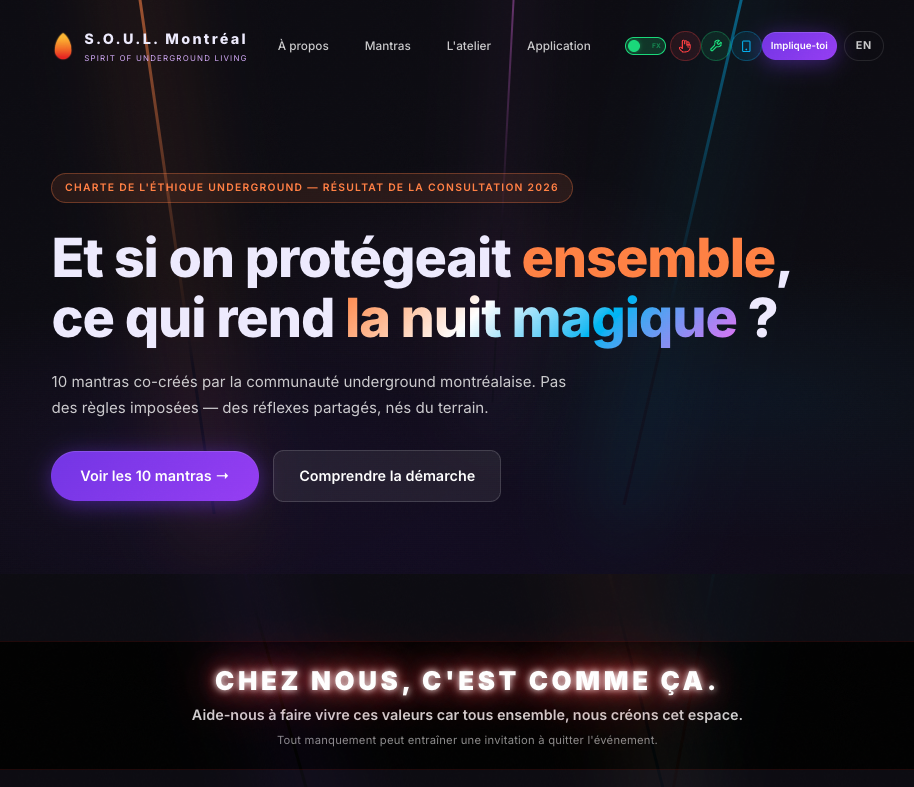
We're all united by this spirit of underground living, the "Spirit Of Underground Living"
right?
That's the SOUL.
3. Why a community naturally ends up protecting itselfWhen something does us this much good, it inevitably ends up becoming precious. And when something becomes precious, we naturally develop the reflex to protect it.
I don't think this protection was born from a rulebook or a code of conduct. I think it appeared quietly, simply because thousands of people started sharing the same places, the same emotions, and the same need to find each other again.
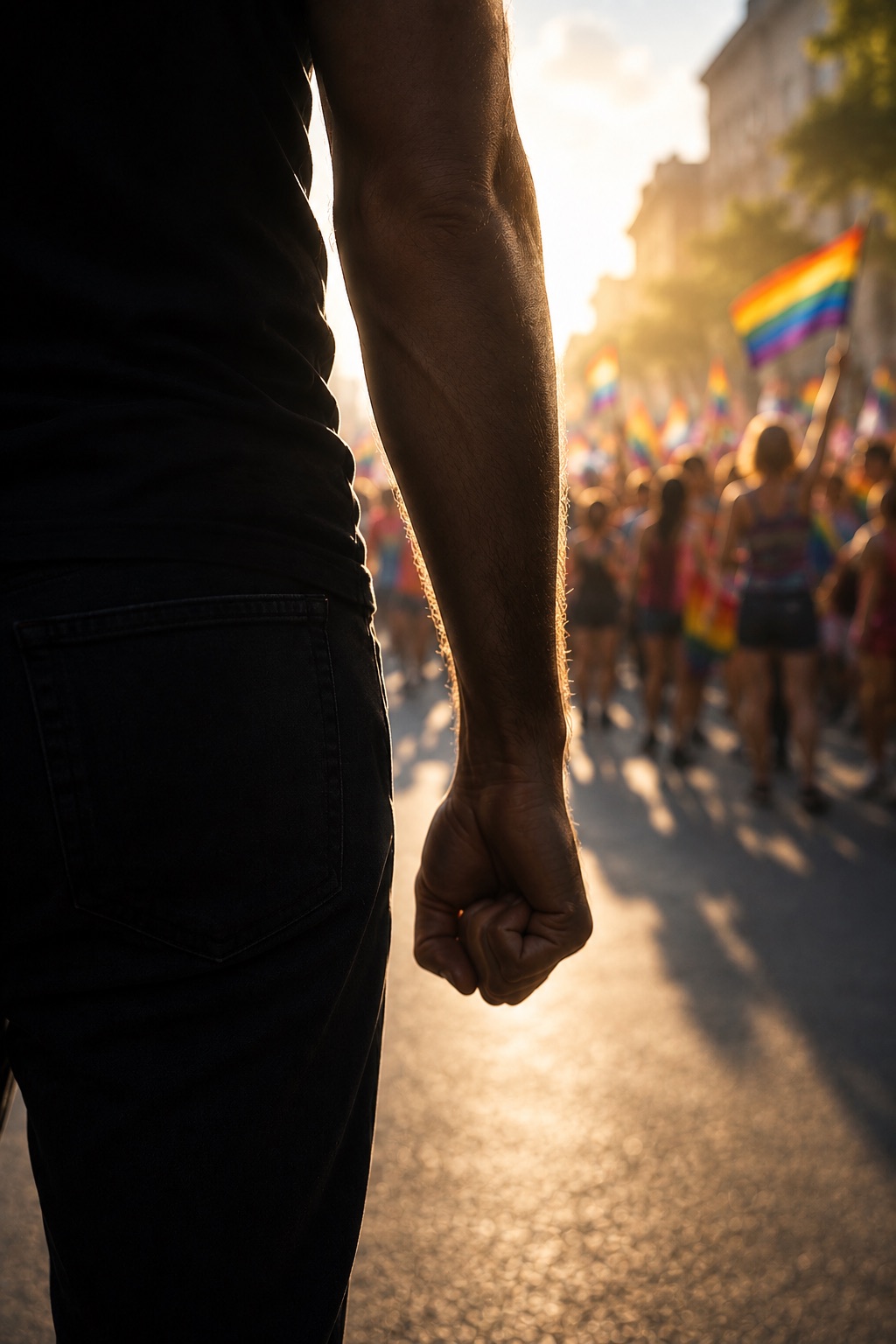
Without always even realizing it, a host of small gestures appear. The familiar looks. The smiles. The nods. The people who come to check in on you. The extraordinary conversations that start in a corner of the floor and carry on until sunrise. The advice. The warnings. The "be careful." The "are you okay?" The people who naturally take care of one another.
I believe we all live through these moments without really noticing them, because they've become normal. Yet these are precisely the things that give a community its soul. They create a climate where you feel the others aren't just around you, but also a little bit with you. That's what I'm trying to crystallize as a concept with this state of association that we all live through this "spirit of underground living" (the S.O.U.L.) that brings together people who resemble us.
That's where kindness is born. And with time, without anyone being able to say exactly when, another feeling appears: that of not being threatened.
That of being able to drop your shoulders. To be able to be yourself. To let yourself go completely into the music, the dancing, the encounters, without constantly having to look over your shoulder.
Thinking about all this, I believe this feeling of security isn't the starting point of a community. It's probably one of its most beautiful results. It's the consequence of all these small gestures we make toward one another, often without even thinking about it. And it's maybe precisely because they feel so natural to us that we forget how precious they are.
Many of us feed on the night and carry it into the day, becoming cooler, more understanding, more open, allowing more freedom, being more "jazzy," being better able to improvise the way we do when we dance…
But oh yeah! Had you ever thought about that?
When you dance, you're actually interacting by adapting to chaos…
All around you, the dancers dance, so they move, so they force you to adapt, right? And we LOVE that! Real dancers don't get offended by little obstacles or little purse detours. On the contrary, they take them as an opportunity to get more steps in, lol.
Dancers don't get offended by a little bump or a little accidental contact here or there with some rando flashing their purse around or a dude with his nose in his phone, but for real...
I'm sure you'll agree with me — real dancers actually never touch each other. Never. And when I say never, I mean never.
You can dance 50,000 steps in a night, share them with other people who share 20,000, 30,000 or 40,000 of their own, and you will never step on a foot, no one will ever step on yours. You won't throw an elbow, you won't bump into anyone, because the dancer whose eyes are open to make the most of their space absolutely does not want any contact that would disrupt their flow. Are we agreed?
And that's what experienced dancers know how to adapt to — all the chaos of their environment, with delight.
Speaking of which, a friend told me at Piknic on Sunday that moving through the crowd while dancing is a bit like a video game. She said: "there are people who rent video games to do exactly what we do. Go down corridors, run through crowds, cross them, avoid obstacles, jump and adapt to all kinds of unexpected things! And we, we're lucky, when we cross Piknic or cross big crowds like that, to just adapt, find our way, and do exactly what those people do in video games."
Wow. Cra-zy! I had never thought of it that way.
I found that a fantastic image.
It's true.
And it made me think, because I know I absolutely LOVE, but I mean TRULY love, diving into a big crowd, crossing it without touching anyone, while dancing. I go crazy for that. When I can, in the big pools of dance, I cross RIGHT THROUGH the crowd, yum!
I love it. It's delicious. Genuinely delicious. So freaking delicious.
SO THEN!
It's in the name of all this that it's worth taking the time to be patient, to be understanding, to be a learner, to be open to others and to communicate to others that we come from kindness, so that everyone keeps their eyes open and looks out for us, the way we look out for them.
And for those who don't do that, we simply need to educate.
And sometimes, when we learn that things are happening that aren't acceptable, we're not obligated to stay silent, to "not get involved." We're not obligated to accept the unspoken, or to stay in hypocrisy.
Everyone chooses for themselves, everyone has their own interests. Everyone does things for reasons that belong to them. But there are certain values that require taking a stand, and deciding whether or not to accept certain behaviors, whether they come from a friend, a lover, someone close, or a stranger.
In 2026, sexual and social misconduct, as well as non-consensual acts, are no longer tolerable. They need to be called out and, without losing your mind over it, everyone has the RIGHT to speak up and call them out in front of others.
That's one of the reasons the "signal for help" gesture exists — created by the Canadian Women's Foundation, illustrated and explained here on the SoulMontreal site: soulmontreal.com/en/signal-for-help.html
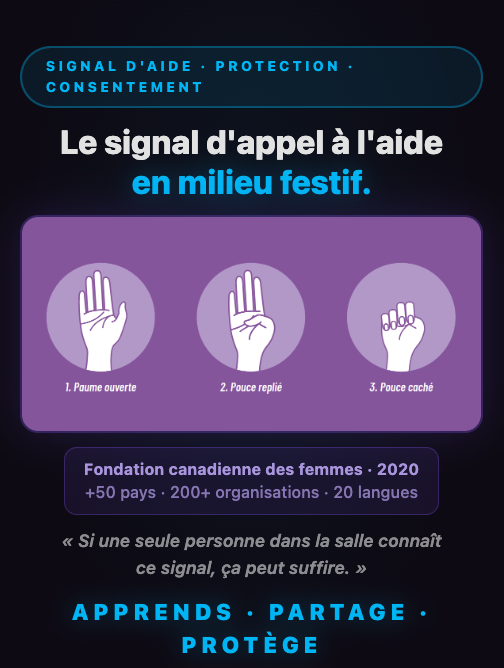
If you see this gesture, you need to act. Sometimes, you shouldn't take further offense over it, but you also absolutely should not simply accept it either — there's no point making a drama out of it, but that doesn't mean letting it slide in silence, or nothing changes. You name it, you own it, you move past it.
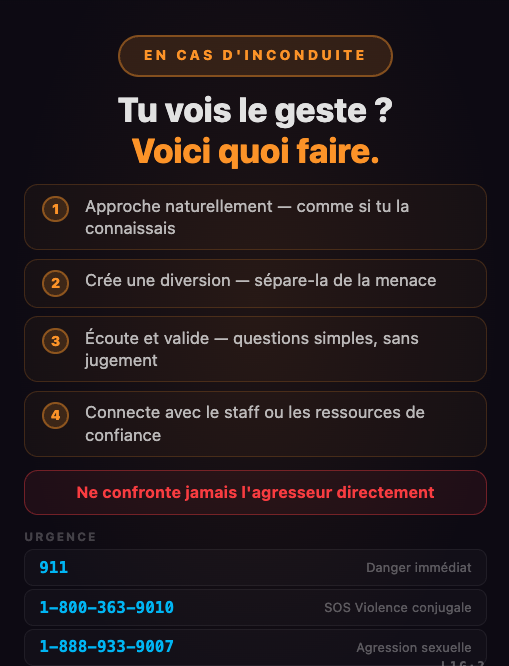
Screenshots from the Soul App →
And if the harassers don't get it, you fackin' KICK them out of our dancefloors.
That's it.
Yes, mistakes happen. You get one. You can make a second mistake. But you don't get a third one.
So, in a community, if someone messes up three times, well, we also need to know how to stand our ground, to protect ourselves — because protection will never come from legal, formal, or official services. I speak from experience.
It's in the love we have for one another that we find the best justification, and the best way to keep an open eye, to be kind toward those we love and who make us feel good — because these people make us better, so it's in our interest that they be well too.
Isn't that right?
So imagine this loop of logic, which is maybe at the base, or at the birth, of this whole system.
Why do we do things?
Why, as a collective, do we make decisions, choices, opinions that support, uphold, confirm, or defend our collective choices? Why do we organize ourselves "as a society?"
Well, it's in order to put in place a balance that makes everyone better within a given spectrum of activity, through the exchange of a few compromises, for the benefit of security, and the payoff of great emotional rewards?
4. What I went throughSince the start of this letter, I've been telling you about the beauty of our community. About music, dance, familiar faces, this kindness that protects us without us even needing to name it. It's all beautiful. It's all true.
But there's a question several of you have asked me these past few weeks: where was Costa? I told you part of the answer in Where is Costa — why I disappeared starting in early June, why my body reacted as if everything was starting all over again. Here, I want to tell you why it matters for all of us.
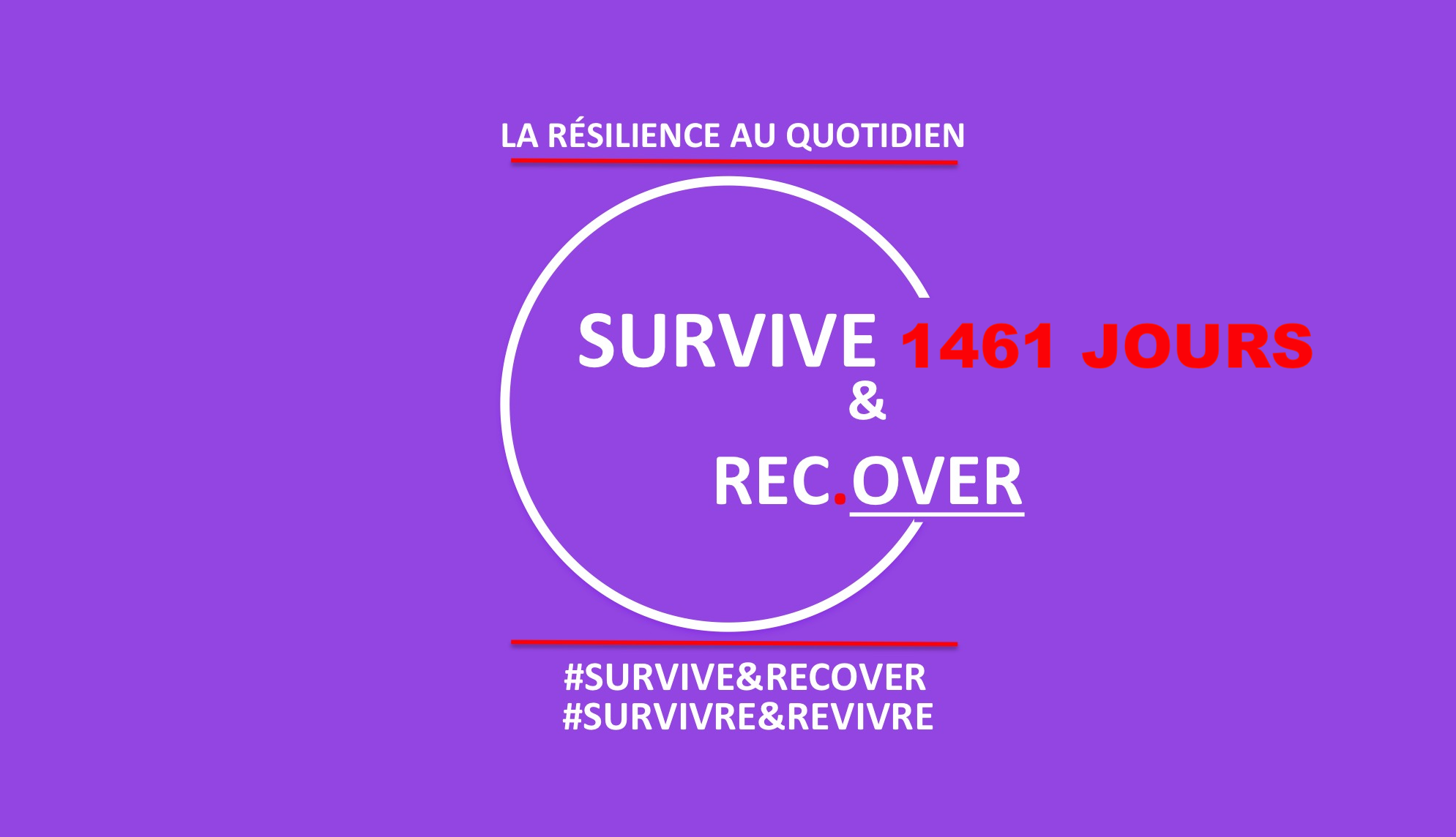
4 years ago, on July 23, 2022, I was the victim of an extremely violent assault that upended my life. On July 23, 2026, that makes 1461 bonus days.
My attacker got out of prison in April. Despite legal conditions forbidding him from doing so, he imposed himself on me: on June 14, he waited for three hours on the sidewalk outside Stereobar. When I walked out, he was there, three meters away from me.
That was enough. Everything came back. My brain went into a skid — in the days that followed, I sank into severe PTSD crises.
You know, I was convinced I was "healed," but no. Healing isn't a straight line. You can move forward for years and discover, without ever seeing it coming, that a single encounter is enough to reawaken a pain you thought was behind you.
To learn more about the full story, and see a photo of his attacker, Costa tells you what happened here →Since his release, my attacker has not respected his release conditions. He's intimidated me, shown back up where I dance, approached a bunch of my friends, collected a bunch of Facebook contacts, and harassed girls. Sad as hell.
Several people have come to tell me they've run into my attacker in recent weeks, and tell me what he says, how he acts. Several people have stepped in. Several people have refused to look away.
A friend who had a run-in with him told me: "Chris! This guy is an abuser in every letter of the word!"
Fuck.
I understood that I wasn't alone. I realized that protecting a community wasn't only a matter of a rulebook, or "the police."
So, you know what? I really tried to act. And ABOVE ALL, I refused to let this slide into silence and the unspoken.
I did everything possible to guarantee my right to my own safety, and that of my community — exactly as I was told to do. I pulled my court files back out. I called the commissions, the prosecutors, the police. I filed a complaint. I wrote dozens of pages of documents, of reports. With no satisfactory response.
In trying to follow the law, I asserted my right to peace and security, supposedly guaranteed by the judgment ordering my attacker not to be in my presence, not to use substances, nor to be in the presence of people from the nightlife scene. I spent entire days on the phone getting passed from one office to another, each one telling me it wasn't their jurisdiction… discouraging.
But what's left for a citizen, when neither the police, nor anyone supposed to act, acts?
So, after all these wasted days, it's through the experience of the opposite that I understood just how much this community was already protecting itself, and that this is the way it happens...
My message is simple and clear. If you see this guy anywhere near a place where you've seen me, over the course of the evening, the day, or the night — wherever it is — if you saw me on a dancefloor and suddenly you see this guy outside, or on the sidewalk, or on the floor, you can tell him, with kindness: "Hey man, you need to clear out. Costa's here, it's for your own good."
I do this in the name of all the victims who will never be able to fight, who will never be able to defend themselves, who will endure the injustices of their attackers without ever having the support of justice. I simply refuse to do nothing and let it go, allowing the possibility that other people might live through what I've been through too.
I am not defaming anyone. This man was found guilty by the court. That's why, when he tells people filth to justify his actions and disparage me, it doesn't fly.
It's for his own good, really — so as not to let him break yet another condition of his probation, which would put him even further at risk.
I'm standing my ground: I do not accept intimidation. But I do it with kindness.
5. Why SOULWhat protects us best isn't just a rulebook.
It's collective responsibility. The courage to speak up. Kindness. The act of protecting what does us so much good.
My response to violence isn't vengeance. It's love, and it's prevention. That's what it is.
That's why SOUL was born. Not from above, not as a rule imposed from on high — co-built with hundreds of voices from this scene. Ten mantras, from the first to the tenth: from "Take care of yourself" all the way to "Look out for each other," passing through consent, kindness, respect for each other's bubble. That's how we do it, around here.
If you'd like to discover them one by one, and see the tools currently in development, I invite you to visit the mantras and SOULMontreal.com. There you'll discover an initiative born from the deep love I hold for this community, and from the conviction that music, dance, respect, kindness, and collective responsibility can keep growing together.
SOUL is nothing more than this reflection put into action. A way of developing communication tools that promote the ethical values of the night, and that contribute, together, to preventing sexual and social misconduct.
Because protecting our community isn't only about reacting once it's too late.
It's choosing, every time we find ourselves on a dancefloor, to take care of what does us so much good.
To read the full story of that night on July 23, 2022: lesparolesdechris.ca
Discover the SOUL mantras: soulmontreal.com/en/mantras.html
Discover SOUL Montreal: soulmontreal.com